
The bright, aromatic air of a bustling Korean market fills my kitchen as I prepare to whip up a steaming bowl of Jjamppong, the Korean Spicy Seafood Noodle Soup that’s as vibrant as it is comforting. This sensational dish brings together an enticing mix of succulent seafood—think tender shrimp and mouthwatering mussels—paired with a variety of colorful veggies, all infused with the warmth of gochugaru spice. One of the best parts? It’s quick to make and super customizable, allowing you to throw in your favorite seafood or seasonal vegetables for a unique twist. Perfect for those bustling weeknights or when I want to impress friends with my culinary skills, Jjamppong is the ultimate answer for anyone craving an adventurous yet cozy meal. Are you ready to dive into this delicious journey together?
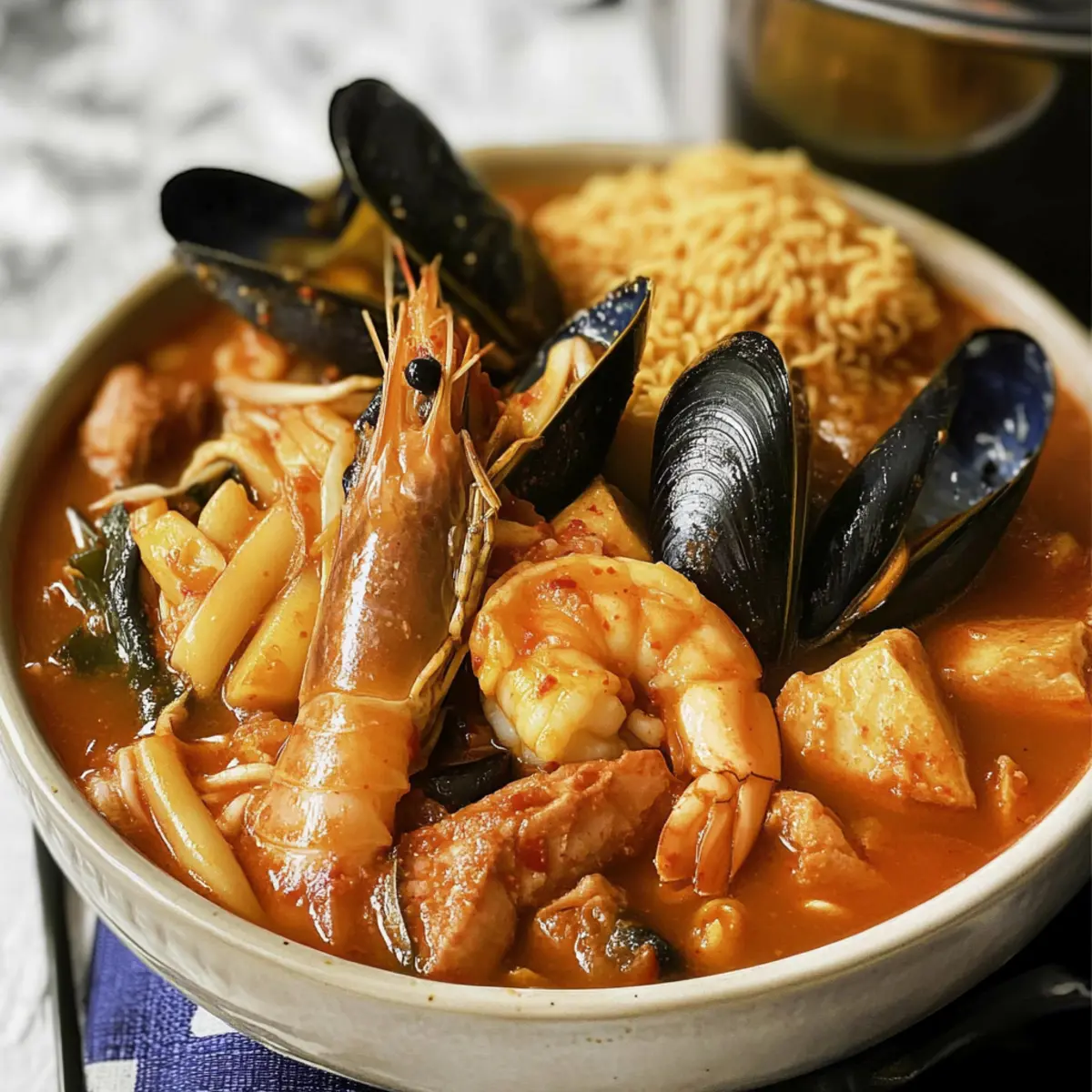
Why is Jjamppong a Must-Try?
Flavor Explosion: This vibrant soup delivers an incredible fusion of seafood and spices that captivates every palate.
Customizable Delights: With adjustable seafood and vegetable options, you can easily tailor this dish to suit your preferences or use what’s in your kitchen.
Quick Cooking: Whipping up a bowl of Jjamppong takes minimal time, making it ideal for busy weeknights or impressing guests without the fuss.
Nutrient-Packed: Loaded with protein and colorful veggies, it’s not only delicious but a healthy choice too.
Comforting & Satisfying: Each spoonful offers a heartwarming blend of textures and flavors, reminiscent of a cozy night at a bustling Korean market.
Pair this dish with some Scallion Chicken Noodle for a complete meal experience!
Jjamppong Ingredients
For the Soup Base
• Korean fresh noodles – The backbone of this dish, giving it structure and chewiness; you can substitute with thick ramen noodles if necessary.
• Water – Essential for creating the soup base; vegetable or seafood stock can enhance flavor greatly.
For the Seafood
• Large shrimp (preferably head-on) – Brings sweetness and depth to the flavor profile; peeled and deveined shrimp work just as well for convenience.
• Mussels or clams – Adds a delightful oceanic touch; feel free to use any available shellfish or swap for more shrimp.
• Squid tube – Provides a wonderful chewy texture; calamari rings can replace it if needed.
For the Vegetables
• Yellow onion – Packs in sweetness and depth; shallots can be a suitable alternative when needed.
• Carrot – Offers natural sweetness and vibrant color; zucchini or bell peppers can also work beautifully.
• Green onion – Lends freshness and a mild punch; scallions or chives are excellent substitutes.
• Garlic – Adds aromatic strength; shallots can be used if you prefer a lighter flavor.
• Napa cabbage – Contributes bulk and a slight crunch; green cabbage or bok choy can easily take its place.
For the Seasoning
• Gochugaru (coarse and fine ground) – The star ingredient for spice and color; omit the fine ground for a spicier kick.
• Korean instant soup stock tablets – Boosts umami richness, making your soup even more flavorful; optional but highly recommended.
• Kosher salt – Elevates all the flavors; sea salt is a non-iodized alternative.
• MSG – Enhances the overall flavor (optional); skip this if you prefer to avoid additives.
• Neutral oil (for cooking) – Crucial for frying aromatics; vegetable or canola oil are suitable alternatives.
Enjoy assembling these ingredients in anticipation of crafting your Jjamppong (Korean Spicy Seafood Noodle Soup)!
Step‑by‑Step Instructions for Jjamppong (Korean Spicy Seafood Noodle Soup)
Step 1: Prepare the Seafood
Begin by cleaning the seafood for your Jjamppong. Rinse the large shrimp under cold water, peeling and deveining them if needed. Soak the mussels or clams in salted water for about 30 minutes to remove any grit. While they soak, cut the squid into rings. This prep ensures your seafood is fresh and ready to shine in the soup.
Step 2: Cook the Noodles
In a large pot, bring water to a rolling boil. Add the Korean fresh noodles and cook according to the package instructions, typically around 3-5 minutes until they’re al dente. Once cooked, drain the noodles in a colander, then rinse them with cold water to stop the cooking process. Set the noodles aside; they’ll be the perfect base for your flavorful soup.
Step 3: Stir-Fry the Aromatics
Heat 2 tablespoons of neutral oil in a wok or large skillet over medium heat. Add sliced yellow onion, carrot, green onion, and minced garlic to the hot oil. Stir-fry for 2-3 minutes until they become fragrant and the onion turns translucent. Next, introduce the napa cabbage to the mix, cooking for another 2 minutes until it wilts slightly, creating a delicious aromatic base for your Jjamppong.
Step 4: Make the Soup Base
Sprinkle both coarse and fine gochugaru into the stir-fried vegetables, stirring quickly for about 30 seconds to let the spices bloom. Carefully pour in 4 cups of water, stirring well to incorporate. Season the broth with a Korean instant soup stock tablet, kosher salt, and optional MSG. Increase the heat and bring the mixture to a boil, allowing the spices to infuse fully for about 5 minutes.
Step 5: Add the Seafood
Once the broth is bubbling, gently add the prepared shrimp, mussels, and squid into the pot. Stir occasionally and let everything simmer for approximately 3-5 minutes, or until the shrimp are curled and vibrant pink and the mussels have opened. This step ensures that all the seafood is cooked perfectly while absorbing the spicy, aromatic flavors of the soup.
Step 6: Assemble and Serve
To serve your Jjamppong, briefly warm up the cooked noodles in boiling water for about a minute to heat them through. Divide the noodles into individual bowls, then ladle the steaming soup filled with seafood and vegetables over them. Garnish with any remaining green onions and serve hot, letting everyone dive into this delightful Korean Spicy Seafood Noodle Soup.
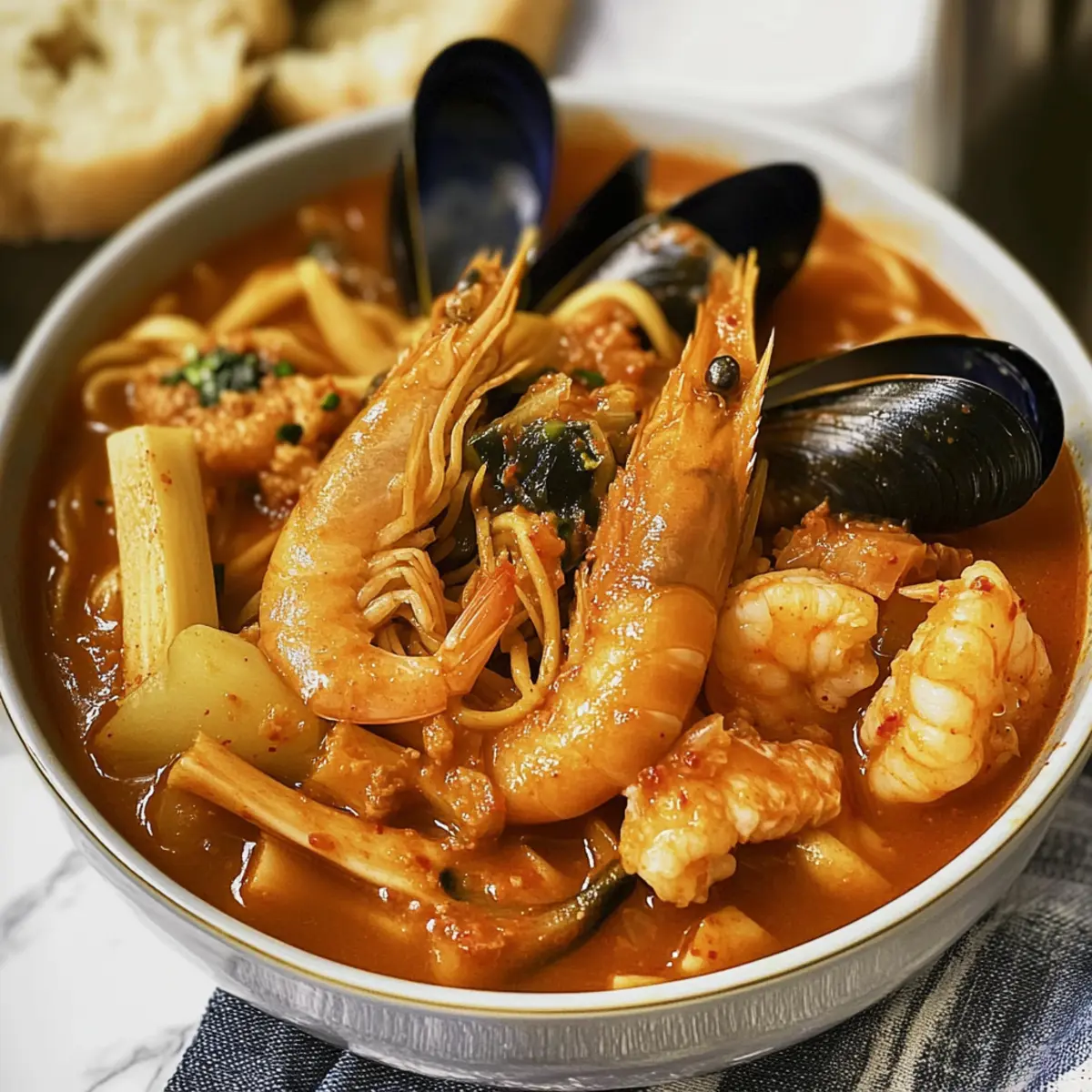
Expert Tips for Jjamppong
-
Prep Ahead: Gather all your ingredients and pre-portion them before cooking. This creates a smoother cooking experience, especially for Jjamppong, which moves quickly!
-
Heat Control: Make sure your wok or pot is hot enough to stir-fry without burning spices. High heat is key for coating vegetables in flavor.
-
Customize Wisely: Feel free to adjust your seafood and vegetable choices, but remember that thinner veggies cook faster, so add them later to avoid overcooking.
-
Spice Management: If you’re sensitive to spice, start with a small amount of gochugaru and gradually increase to your preferred level for the Jjamppong.
-
Don’t Rush the Seafood: Let seafood simmer just until fully cooked; overcooking will result in a rubbery texture. This ensures a fresh and tender bite in each bowl!
Jjamppong Variations & Substitutions
Feel free to unleash your creativity and make this dish your own with exciting twists and substitutions!
-
Seafood Swap: Try using crab or scallops instead of shrimp for a delightful change. The sweet, rich flavors will elevate your Jjamppong experience.
-
Vegetable Medley: Incorporate mushrooms or bell peppers for added texture and flavors. The earthy taste of mushrooms will complement the spicy broth beautifully.
-
Dairy-Creamy Twist: For a rich and creamy soup, stir in coconut milk or heavy cream for a luscious texture. This twist brings a tropical vibe and smoothness to every sip.
-
Heat Level: Adjust the spiciness by using fewer tablespoons of gochugaru or adding fresh jalapeños for an extra kick. Personalize it to suit your taste buds.
-
Noodle Variety: If you can’t find Korean noodles, substitute with udon or rice noodles. Each option brings a unique chewiness that will still satisfy.
-
Vegan Delight: Swap seafood with tofu and use a vegetable broth for a hearty vegan version. The tofu will soak up all the aromatic flavors deliciously.
-
Herb Infusion: Garnish your Jjamppong with fresh cilantro or basil for a burst of freshness. These herbs can lighten the dish and add layers of deep aroma.
-
Spiced Oil Drizzle: Create a quick chili oil using oil and chili flakes for an added depth of flavor. Drizzling this on top just before serving brings a delightful punch.
For more culinary inspiration, check out these delicious recipes: Scallion Chicken Noodle or explore more options with another Scallion Chicken Noodle. Enjoy experimenting!
What to Serve with Jjamppong (Korean Spicy Seafood Noodle Soup)
Creating a balanced meal around your steaming bowl of Jjamppong can elevate the dining experience to new heights.
-
Steamed Rice: A classic pairing that balances the spiciness of the soup, helping to absorb those delicious flavors. Simple yet essential!
-
Korean Pancakes: Enjoy crispy, savory scallion or seafood pancakes as a delightful appetizer that harmonizes beautifully with the umami of Jjamppong.
-
Kimchi: This tangy, fermented side dish offers a perfect crunchy contrast to the soup’s warmth, enhancing flavor and providing probiotics.
-
Pickled Radishes: These bright, sweet-and-sour radishes cleanse the palate between bites, making every spoonful of Jjamppong even more enjoyable.
-
Salad with Sesame Dressing: A crisp salad with a sesame dressing lightens the meal, providing a refreshing counterpoint to the rich, spicy broth.
-
Cold Beer: Pair your Jjamppong with a cold, crisp beer to cut through the heat while enhancing the overall flavors—a refreshing choice for any seafood dish.
-
Fruit Dessert: A light fruit salad or one with tropical notes, such as mango or pineapple, will provide a sweet finish to balance the meal’s spiciness.
-
Soju: This Korean rice liquor provides a smooth complement to the soup, enhancing the dining experience with a traditional touch.
Indulging in these pairings will transform a simple meal into a vibrant culinary journey worth savoring!
Make Ahead Options
Jjamppong (Korean Spicy Seafood Noodle Soup) is perfect for those busy weeknights when time is tight! You can prep the vegetables and seafood up to 24 hours in advance, storing them separately in the refrigerator to maintain freshness. For optimal taste, clean and devein your shrimp, soak mussels in salted water, and chop your veggies the night before. When you’re ready to enjoy your delicious soup, simply sauté the aromatics, add broth, and mix in the prepped seafood for a nightly meal that’s just as vibrant and flavorful. This way, you’ll save time while still delivering a comforting dish that warms the soul!
Storage Tips for Jjamppong
Fridge: Store leftover Jjamppong in an airtight container for up to 3 days. The noodles may become bloated, so it’s best to keep them separate from the broth.
Freezer: Freeze Jjamppong for up to 2 months in a freezer-safe container. To maintain quality, ensure it’s sealed tightly to prevent freezer burn.
Reheating: Gently reheat the soup on the stovetop over medium heat. Add a splash of water or broth to help revive the noodles and soup consistency.
Serving: For the best experience, serve the reheated Jjamppong hot, garnishing with fresh green onions to bring back that vibrant flavor.
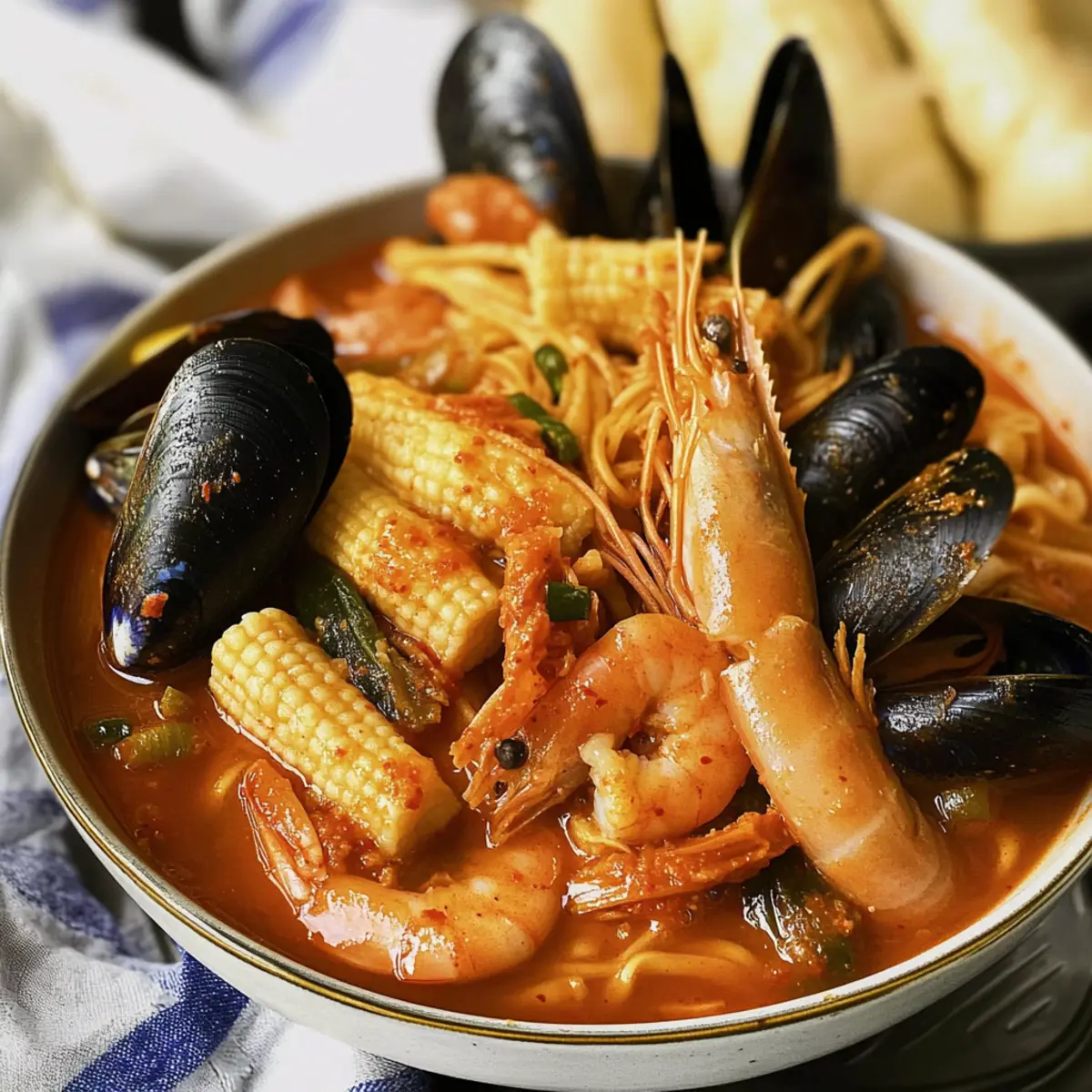
Jjamppong (Korean Spicy Seafood Noodle Soup) Recipe FAQs
What type of noodles should I use for Jjamppong?
For Jjamppong, Korean fresh noodles are ideal as they provide the perfect structure and chewiness. However, if you can’t find them, you can substitute with thick ramen noodles. Make sure to cook them according to the package instructions for the best texture.
How should I store leftover Jjamppong?
Store leftover Jjamppong in an airtight container and keep it in the fridge for up to 3 days. It’s important to keep the noodles separate from the broth to prevent them from becoming too bloated and mushy. When ready to enjoy, you can reheat the soup and noodles on the stovetop.
Can I freeze Jjamppong? If so, how?
Absolutely! You can freeze Jjamppong for up to 2 months. To do this, ensure that it’s stored in a freezer-safe container. When freezing, try to keep the noodles and broth separate. On the day you plan to enjoy it, let the soup thaw in the fridge overnight before gently reheating it on the stovetop.
What if my seafood is overcooked or rubbery?
If you find that your seafood has turned rubbery, it’s likely due to being overcooked. To prevent this in future batches, be sure not to simmer the seafood for more than 3-5 minutes. Add it to the soup only after the broth has reached a rolling boil, and remove it as soon as it’s cooked through.
Are there any dietary considerations for Jjamppong?
Yes, if you’re serving Jjamppong to those with allergies or dietary restrictions, be mindful of the seafood and any added ingredients like MSG. You can easily omit MSG if preferred. Additionally, you can substitute shellfish for alternative proteins such as chicken or tofu, ensuring a delightful meal for everyone!
What should I do if the soup is too spicy for my taste?
If you find the Jjamppong too spicy, next time you can reduce the amount of gochugaru you use. Alternatively, to balance the heat in the current batch, consider adding a splash of coconut milk or cream to tone down the spiciness, giving the broth a creamy texture while mellowing the flavors.
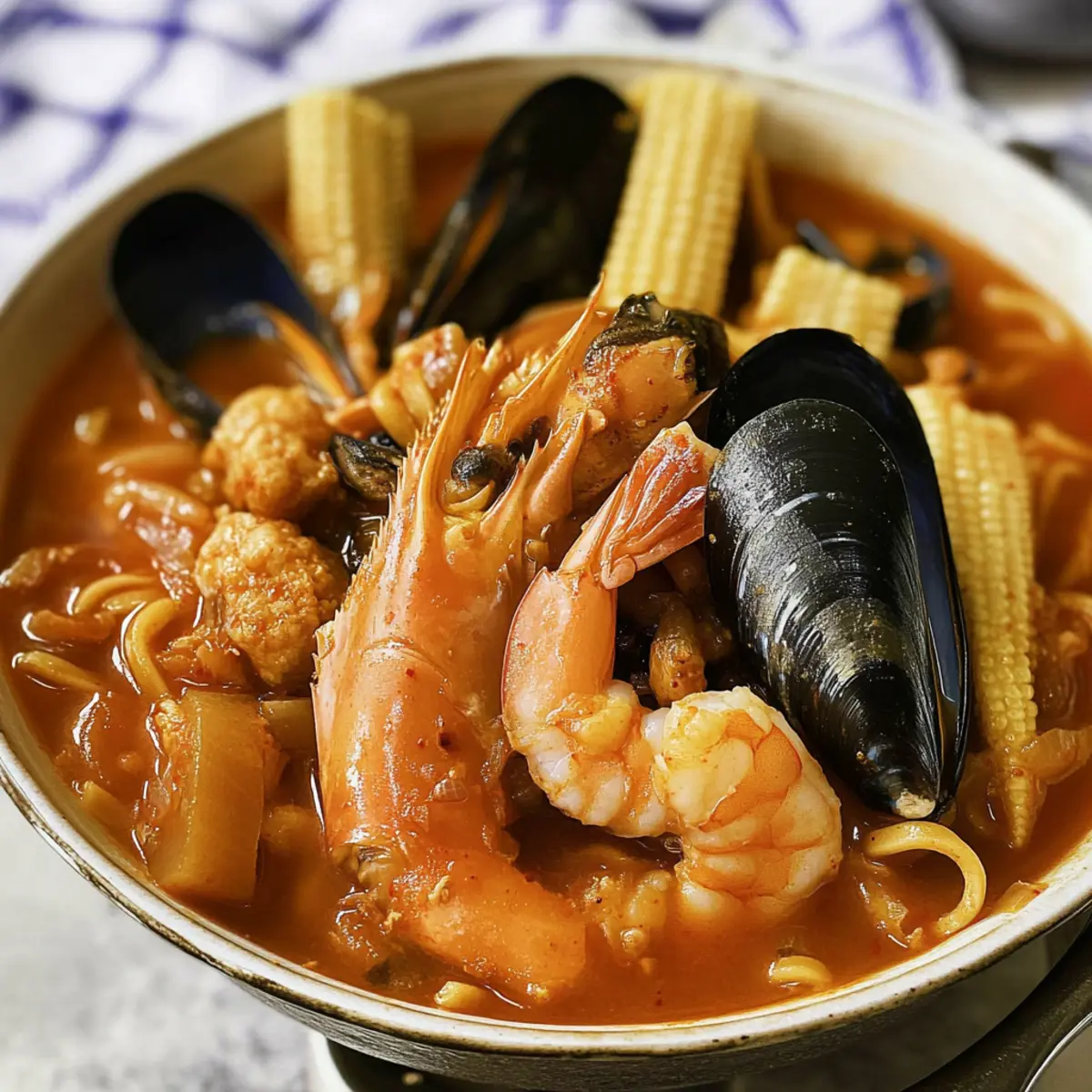
Savor the Spice: Jjamppong (Korean Spicy Seafood Noodle Soup)
Ingredients
Equipment
Method
- Clean the seafood: rinse the large shrimp and peel if needed, soak mussels or clams in salted water for 30 minutes, cut squid into rings.
- In a large pot, bring water to a boil and cook the Korean fresh noodles for 3-5 minutes until al dente. Drain and rinse with cold water.
- Heat 2 tablespoons of neutral oil in a wok over medium heat, stir-fry yellow onion, carrot, green onion, and minced garlic for 2-3 minutes.
- Add napa cabbage to the mixture and cook for another 2 minutes.
- Sprinkle gochugaru into the stir-fried veggies, stir for 30 seconds. Pour in 4 cups of water, add soup stock tablet, salt, and optional MSG. Bring to boil for 5 minutes.
- Add shrimp, mussels, and squid into the boiling broth and simmer for 3-5 minutes until shrimp are cooked and mussels have opened.
- Warm the cooked noodles in boiling water for a minute, divide into bowls, and ladle the soup with seafood and vegetables over them.
Leave a Reply