
As I rolled the vibrant seaweed sheets onto my bamboo mat, I couldn’t help but feel a surge of excitement. Kimbap (Korean Seaweed Rice Rolls) offers a delightful escape into Korean cuisine, transforming simple ingredients into a colorful feast. This dish is not only a quick meal option but also endlessly customizable, making it a perfect choice for both busy weeknights and weekend picnics. With each bite, you’ll enjoy the combination of chewy seaweed, fluffy rice, and fresh, crunchy vegetables that satisfies the taste buds without the guilt of fast food alternatives. Plus, you’ll love how leftover ingredients from your fridge can easily find their way into these charming rolls. Curious about how to create this delicious fusion of flavors? Let’s dive into making your very own kimbap!
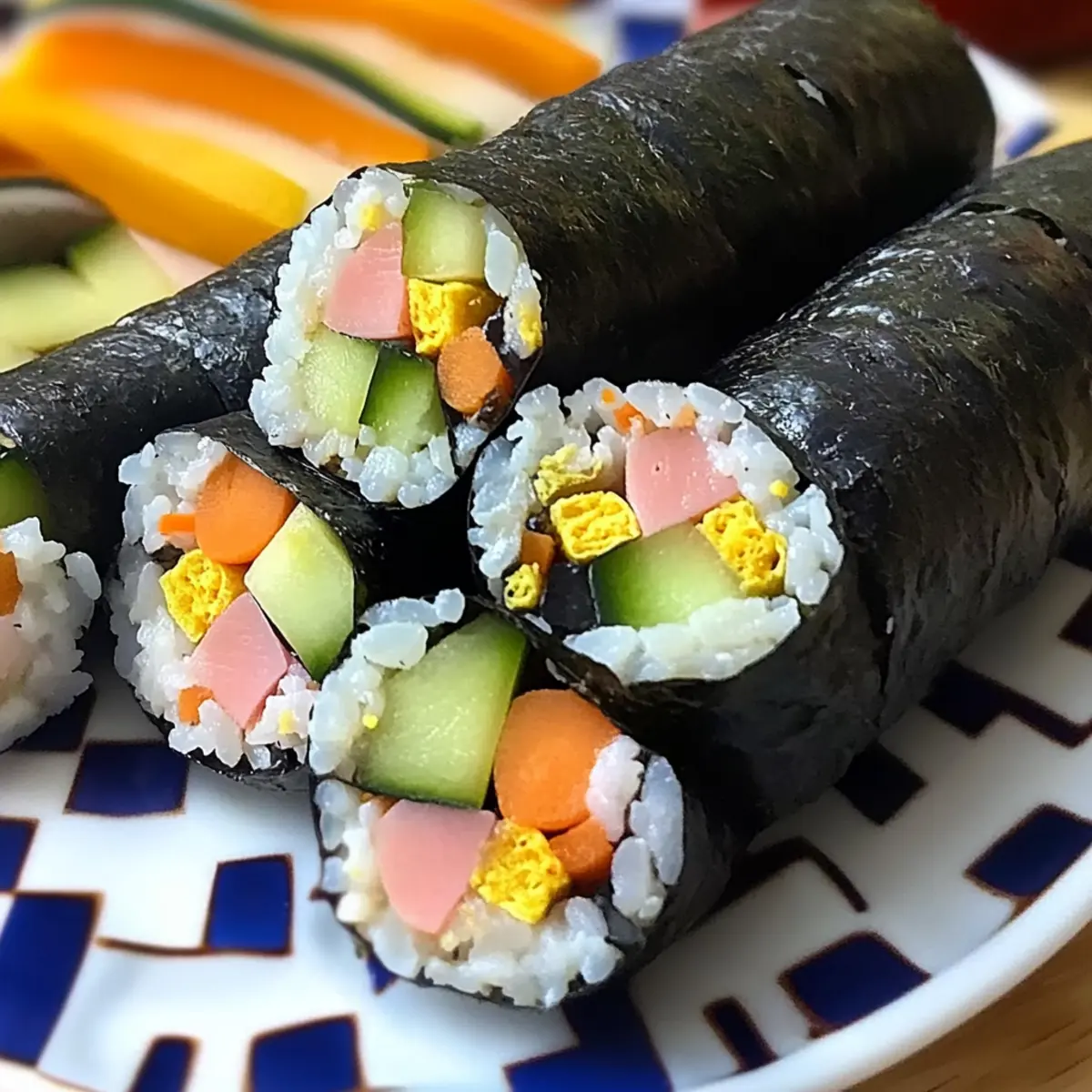
Why is Kimbap So Irresistible?
Colorful, Customizable Goodness: With its vibrant fillings, kimbap is perfect for showcasing your creativity in the kitchen. Quick and Easy: Ready in no time, this dish is suited for busy schedules. Healthy Alternative: Each bite delivers fresh ingredients minus the guilt of fast food. Family-Friendly Fun: Kids and adults alike will enjoy creating their own versions. If you’re looking for more quick meal ideas, check out Honey Lime Stack or Peruvian Chicken Rice that also bring families together.
Kimbap Ingredients
-
For the Rice
• Short-grain rice – This sticky rice is essential for holding the kimbap together; sushi rice is a great alternative for texture. -
For the Fillings
• Egg – Adds protein; slice into strips after cooking, or swap for scrambled tofu for a vegetarian twist.
• Cucumber – Fresh and crunchy; remove seeds for better texture, or try using creamy avocado as a substitute.
• Carrots – Provide color and sweetness; salt, cook, and sauté to enhance the flavor, or opt for zucchini for a lower-carb option.
• Pickled Radish (Danmuji) – Delivers a tangy punch; essential for authentic kimbap flavor, but feel free to use other pickles if danmuji isn’t available.
• Spam – Fry for savory richness; you can substitute with lean chicken or tofu for a healthier alternative. -
For the Wrap
• Seaweed (Gim) – The main wrapper that holds everything together; consider soy paper for a different flavor experience. -
Optional Toppings
• Sesame oil – Brush on the outside for flavor and shine; it adds an aromatic touch.
• Sesame seeds – Sprinkle on top for a nutty finish and extra texture.
Now that you have these key ingredients ready, you’re already on your way to creating delightful kimbap (Korean Seaweed Rice Rolls) that will make every meal feel special!
Step‑by‑Step Instructions for Kimbap (Korean Seaweed Rice Rolls)
Step 1: Prepare Fillings
Begin by beating the eggs and cooking them in a non-stick pan over medium heat until set, about 3-4 minutes. Once cooked, slide the omelet onto a cutting board and slice it into thin strips. Next, wash and cut the cucumber and carrots into long, thin strips, removing the seeds from the cucumber for a better texture. Slice the pickled radish and Spam into similar lengths to match the other fillings.
Step 2: Season and Cook Carrots
To enhance the flavor of the carrots, toss them with a pinch of salt and let them sit for 15 minutes to draw out moisture. Afterward, squeeze the excess liquid and sauté these salted strips in a pan over medium heat for about 4 minutes, or until they soften and become slightly caramelized, adding a sweet dimension to your kimbap.
Step 3: Cook Spam
In a small skillet, heat a tablespoon of vegetable oil over medium heat. Add the sliced Spam and fry for approximately 1 minute on each side until golden brown and crispy, making sure to flip carefully so they don’t break apart. This adds a savory richness that will complement the fresh ingredients in your kimbap.
Step 4: Assemble
Lay a sheet of seaweed (gim) on a bamboo mat, shiny side facing down. With wet fingers, spread a layer of cooked rice evenly across the seaweed, leaving a 2 cm border at the top edge to allow for rolling. Ensure the rice is slightly sticky for better adherence and press down gently to create an even layer.
Step 5: Fill
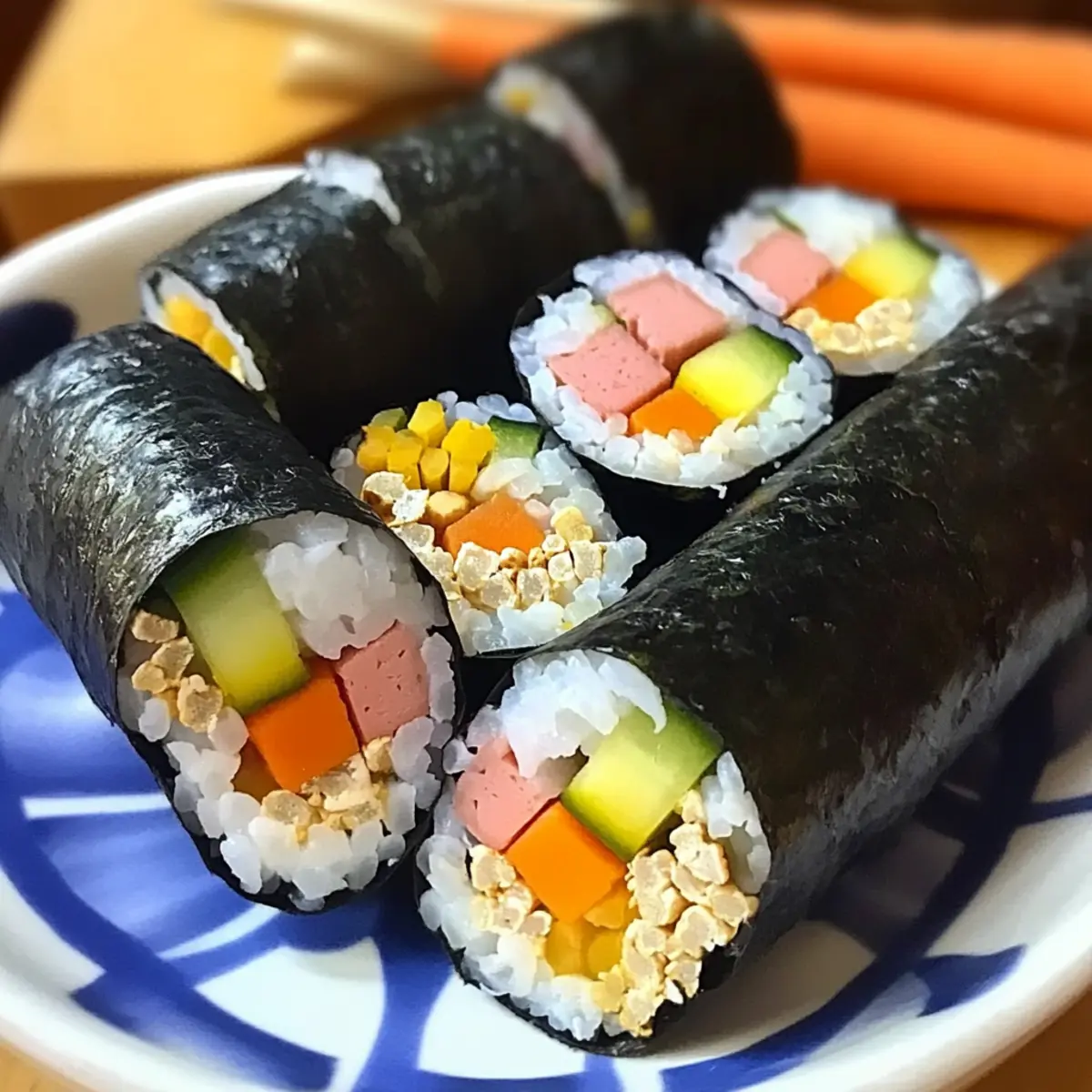
Place strips of the prepared fillings—the egg, cucumber, carrots, pickled radish, and Spam—across the center of the rice layer. Arrange them neatly side by side, ensuring each filling can be seen when the kimbap is sliced. This step is crucial because it makes your kimbap visually appealing and bursting with flavor.
Step 6: Roll
Using the bamboo mat, start rolling the seaweed away from you while applying gentle pressure to form a tight roll. Make sure the fillings stay centered as you roll. When you reach the rice-free edge of the seaweed, dampen it slightly with water to seal the kimbap. Roll it until all the way sealed, ensuring it holds its shape.
Step 7: Finish
As an optional touch, brush the outside of the rolled kimbap lightly with sesame oil for a glossy finish and an added nutty flavor. If desired, sprinkle sesame seeds on top for an extra layer of texture and flavor, making your kimbap even more inviting and delicious.
Step 8: Slice
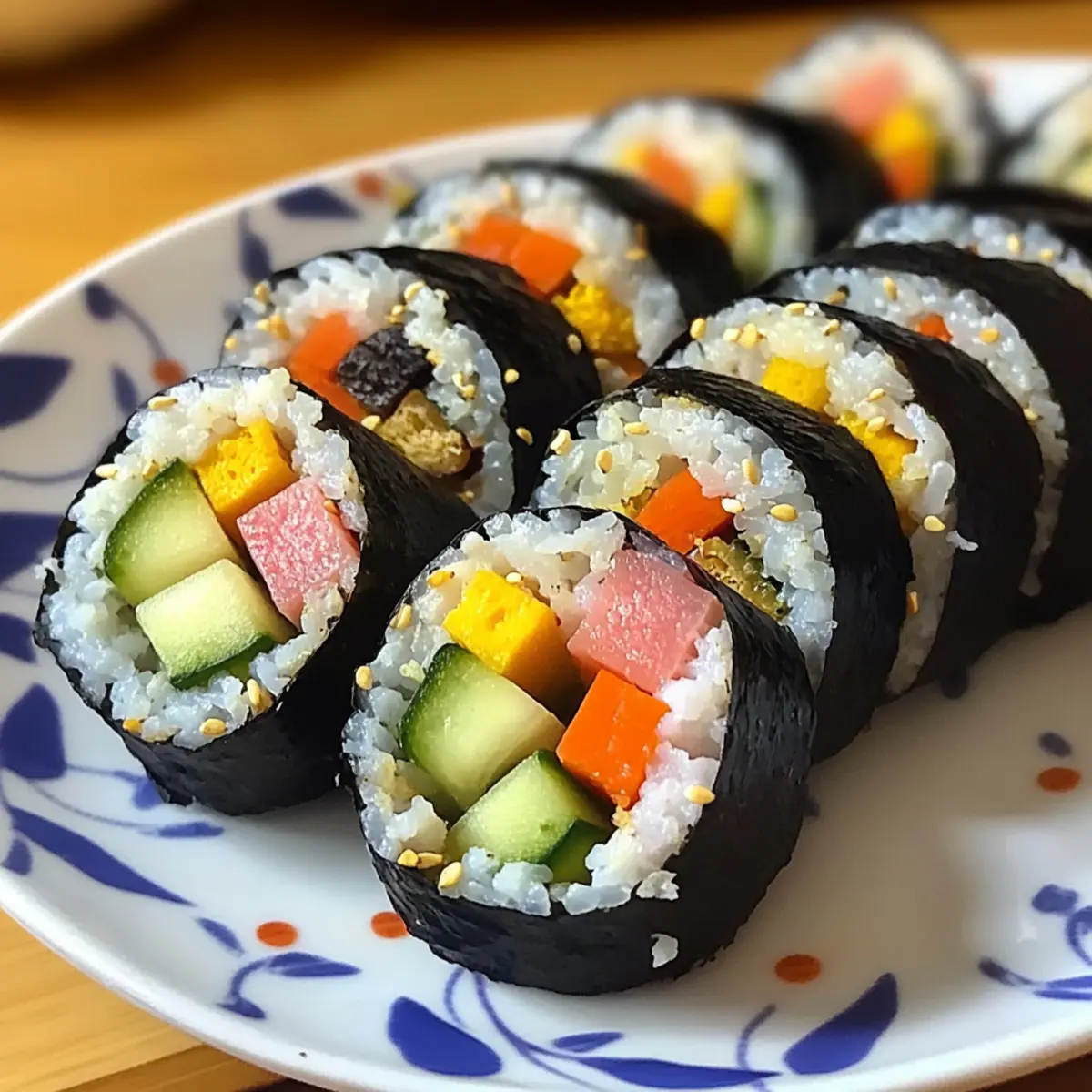
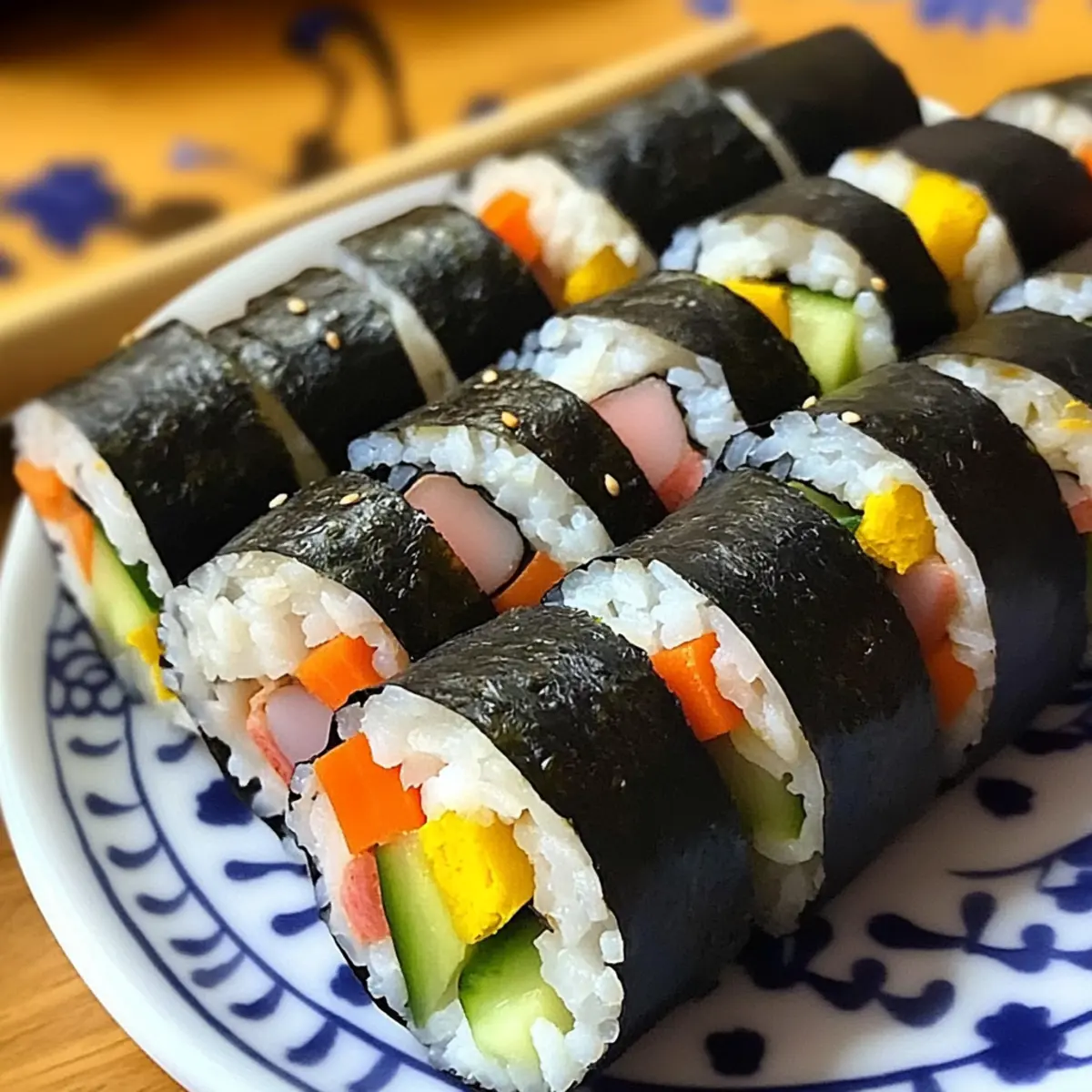
To serve, use a sharp knife to cut the kimbap into bite-sized pieces. Make clean cuts by wiping the blade with a damp cloth between slices to ensure neat edges. Arrange the kimbap pieces on a plate for a beautiful presentation, showcasing the colorful fillings inside this delightful Korean seaweed rice rolls.
Make Ahead Options
These Kimbap (Korean Seaweed Rice Rolls) are perfect for busy meal preppers! You can prepare the fillings—like cooked and sliced egg, sautéed carrots, and fried Spam—up to 24 hours in advance. Simply store these components in airtight containers in the refrigerator to keep them fresh. For the rice, prepare it a few hours ahead, allowing it to cool completely before refrigerating to prevent it from drying out. When you’re ready to enjoy your delicious kimbap, roll them up just before serving for that fresh taste. This way, you’ll have family-friendly rolls ready whenever hunger strikes without sacrificing quality or flavor!
Storage Tips for Kimbap
-
Fridge: Store leftover kimbap in an airtight container or wrap tightly in plastic wrap. It will remain fresh for up to 24 hours in the refrigerator, ensuring those vibrant flavors stay intact.
-
Freezer: For longer storage, wrap kimbap individually in plastic wrap and place in a freezer bag. It can keep well in the freezer for up to 1 month. Thaw in the fridge overnight before serving.
-
Room Temperature: Enjoy at room temperature for optimal taste. If refrigerated, let kimbap sit out for 15-20 minutes before serving to soften the texture.
-
Reheating: If necessary, reheat your kimbap by placing it on a plate, covering with a wet paper towel, and microwaving for 30 seconds. This helps maintain moisture without compromising the quality of your delicious kimbap (Korean Seaweed Rice Rolls).
Kimbap Variations & Substitutions
Feel free to get creative with your kimbap and make it your own with these delightful twists!
- Dairy-Free: Omit cheese, or use cashew cheese for a creamy texture without dairy.
- Vegetable Boost: Add bell peppers or spinach for a pop of color and nutrition. These additions make your kimbap even more vibrant!
- Spicy Kick: Incorporate sriracha or kimchi for a hint of heat, satisfying those who crave some spice in their meals.
- Seafood Twist: Use crab sticks or shrimp instead of Spam for a lighter seafood variation. This can elevate the kimbap, giving it a fresh taste of the ocean.
- Herb Infusion: Add fresh herbs like cilantro or basil for an aromatic twist that brightens every bite. They create an incredible depth of flavor that’s sure to impress your guests.
- Grain Swap: Try quinoa or brown rice instead of white rice for added health benefits and a nutty flavor. This is perfect for those looking to increase their nutritional intake!
- Sweet & Savory: Include sweet potato or roasted beets for a unique and colorful filling that adds sweetness to balance the savory elements.
- Wrap Alternatives: Experiment with soy paper, or lettuce wraps for a fun, gluten-free option. These swaps can provide a refreshing take on traditional kimbap.
No matter how you choose to customize your kimbap, the key is to enjoy the process, creating something uniquely yours! If you’re interested in more inspiration, be sure to check out the delicious Peruvian Chicken Rice and Honey Lime Stack for flexible meal ideas that encourage creativity in the kitchen.
Expert Tips for Kimbap
-
Roll Tightly: Ensure a snug roll to prevent kimbap from falling apart. Too loose and it may unravel during slicing!
-
Freshness Matters: For optimal taste, enjoy your kimbap within a few hours. If storing, wrap tightly and keep in the fridge, but consume within 24 hours.
-
Reheat Wisely: If reheating, cover with a wet paper towel and microwave for 30 seconds. This keeps the kimbap moist and prevents it from drying out.
-
Avoid Overfilling: Less is often more! Overloading your kimbap can make it hard to roll and cut. Aim for a balanced filling to rice ratio for the best results.
-
Presentation Perfection: Use a sharp knife and wipe it between cuts for clean edges. It elevates the visual appeal of your kimbap, making each piece look irresistible!
What to Serve with Kimbap (Korean Seaweed Rice Rolls)
There’s something magical about creating a full meal that enhances the colorful delights of kimbap, making every bite even more satisfying.
-
Crispy Green Salad: A fresh salad with crunchy greens and a tangy dressing complements the savory flavors of kimbap beautifully. The crispiness adds a refreshing crunch that balances the richness of the seaweed rolls.
-
Sweet Potato Fries: Baked sweet potato fries offer a slightly sweet and crispy side that pairs wonderfully with the savory kimbap. Their natural sweetness and delightful texture contrast nicely, making every bite a celebration.
-
Miso Soup: This warm, comforting soup has umami flavors that enrich the meal while providing a soothing balance to the vibrant kimbap. It’s perfect for dipping and enhancing the overall dining experience.
-
Pickled Vegetables: A small side of assorted pickled vegetables adds a zesty kick that brightens up the meal. The tanginess complements the flavors of kimbap while offering a delightful crunch that awakens your palate.
-
Korean Kimchi: Spicy and tangy kimchi introduces a bold flavor contrast that elevates the kimbap experience. The fermentation adds depth to each bite, creating a mouthwatering fusion of tastes.
-
Chilled Soju: For a refreshing drink, consider serving chilled soju, a traditional Korean spirit that pairs perfectly with savory dishes. Its smoothness enhances the meal, adding a celebratory touch to your dining adventure.
-
Fruity Asian Slaw: A slaw made with crunchy cabbage, carrots, and a fruity dressing provides a bright, vibrant addition. The sweetness and acidity in the slaw uplift the kimbap, making the entire meal refreshing.
-
Mango Sorbet: End the meal on a sweet note with mango sorbet, offering a fruity and refreshing palate cleanser that compliments the dish. Its vibrant flavor contrasts beautifully with the savory elements of kimbap.
Kimbap (Korean Seaweed Rice Rolls) Recipe FAQs
What kind of seaweed should I use for kimbap?
Absolutely! The best option for kimbap is gim, the traditional seaweed used in Korean cuisine. It’s thin, crispy, and comes pre-toasted, giving your rolls the perfect flavor. If you’re looking for an alternative, soy paper provides a milder taste that’s also gluten-free, allowing for versatility in your rolls.
How should I store leftover kimbap?
I often store leftover kimbap by wrapping it tightly in plastic wrap or placing it in an airtight container. It’s best enjoyed fresh, but if you need to keep it, it will stay good in the refrigerator for up to 24 hours. For the juiciest experience, it’s a good idea to let it sit out at room temperature for 15-20 minutes before enjoying!
Can I freeze kimbap?
Certainly! To freeze your kimbap, wrap each roll tightly in plastic wrap and then place them inside a freezer bag. They will retain their flavor for about 1 month. When you’re ready to enjoy them, simply thaw in the fridge overnight for the best results. You can also reheat the kimbap by covering it with a wet paper towel and microwaving for 30 seconds, which helps maintain moisture.
What if my kimbap falls apart when I roll it?
Very! If your kimbap is falling apart, it might be due to not rolling it tightly enough. Make sure to apply gentle pressure when rolling to keep the fillings secure. Additionally, avoid overfilling—less is often more! If you notice it’s still unrolling, consider sealing the roll with a bit of rice at the edge to help keep it together.
Are there any dietary considerations for kimbap?
Yes! Kimbap can be tailored to suit a variety of dietary needs. For gluten-free options, ensure that your ingredients like soy sauce and pickles are labeled gluten-free. If you’re making it vegetarian, simply replace the Spam with tofu or other veggies. Always be mindful of any allergies, particularly with ingredients like sesame seeds or specific veggies, to ensure everyone can enjoy this delicious meal!
How can I enhance the flavor of my kimbap?
For an extra flavor boost, consider brushing the outside with sesame oil and sprinkling sesame seeds before serving. Additionally, experimenting with different fillings, such as marinated vegetables or adding some cheese, can elevate your kimbap experience. Try to keep your ingredients fresh and colorful—this not only enhances taste but also makes your kimbap visually appealing!
Kimbap: Delicious Korean Seaweed Rice Rolls You’ll Love
Ingredients
Equipment
Method
- Prepare Fillings: Beat eggs and cook in a non-stick pan over medium heat until set. Slice into strips. Wash and cut cucumber and carrots.
- Season and Cook Carrots: Toss carrot strips with salt and let sit for 15 minutes. Sauté for about 4 minutes until softened.
- Cook Spam: In a skillet, heat oil and add sliced Spam. Fry for about 1 minute on each side until golden brown.
- Assemble: Lay seaweed on the bamboo mat, spread a layer of rice, leaving a border for rolling.
- Fill: Arrange the prepared fillings across the center of the rice layer.
- Roll: Roll the seaweed away from you while applying pressure to form a tight roll.
- Finish: Brush with sesame oil and sprinkle sesame seeds on top.
- Slice: Use a sharp knife to cut into bite-sized pieces and arrange on a plate.
Leave a Reply