
As I watched the steam rise from the pot, I couldn’t help but feel a sense of calm wash over me. There’s something incredibly soothing about a bowl of Japanese Glass Noodle Soup (Harusame Soup). This delightful dish combines delicate glass noodles with a vibrant medley of fresh vegetables, all enveloped in a light and comforting broth. Perfect for a quick lunch or a cozy dinner, this vegetarian recipe is not only easy to whip up in just 30 minutes but also packs a healthy punch with fiber-rich ingredients. The umami notes from ginger, garlic, and mirin create a rich tapestry of flavors that transport you to a tranquil Japanese kitchen, even if you’re just at home after a long day. Curious about how you can recreate this comforting experience in your own kitchen? Let’s dive into the recipe!
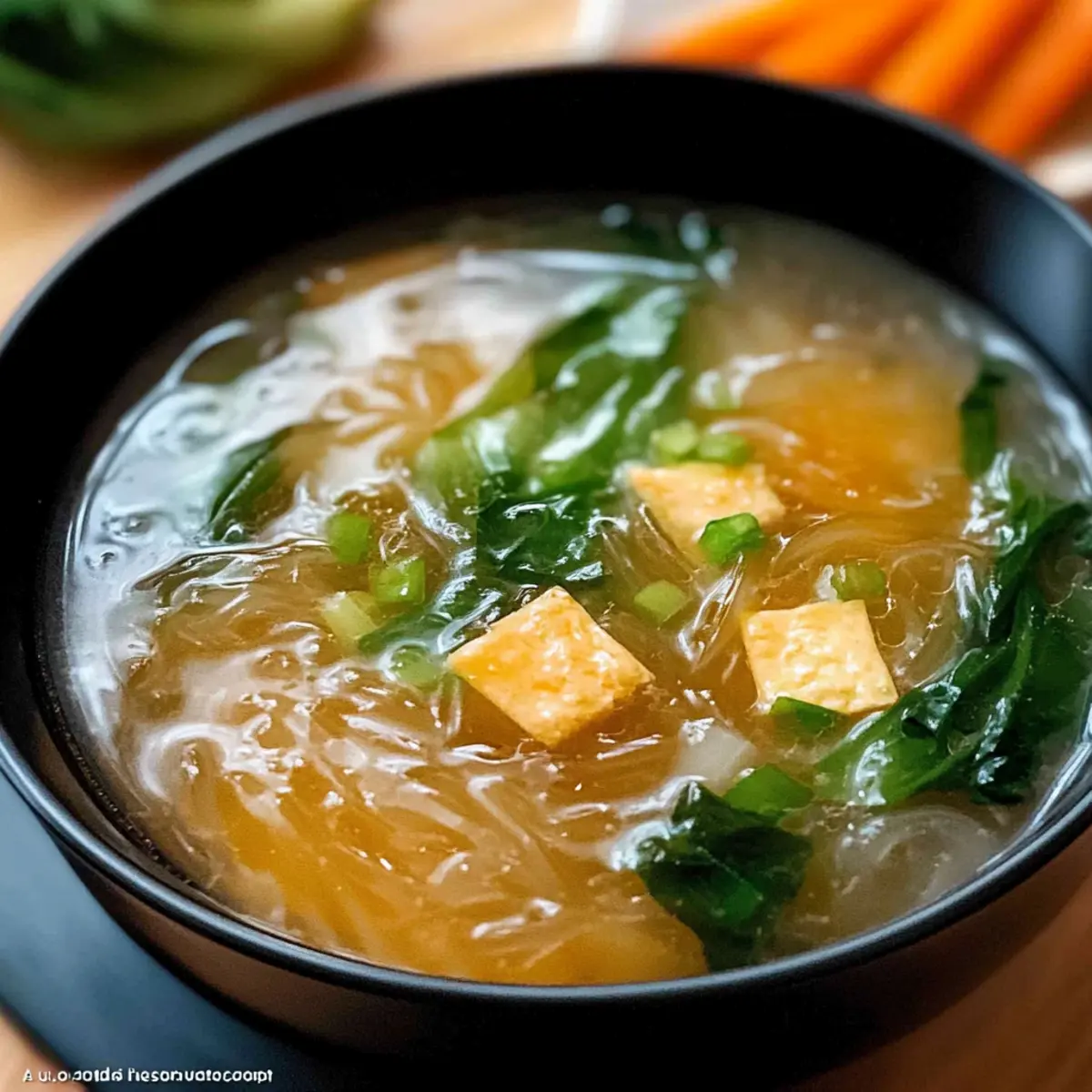
Why is Japanese Glass Noodle Soup a Must-Try?
Comforting warmth: This soup wraps you in a cozy embrace, making it the perfect dish for cold evenings or simply when you’re in need of a pick-me-up.
Quick and easy: Ready in just 30 minutes, it’s ideal for busy days when you crave homemade goodness without spending hours in the kitchen.
Healthy choice: Packed with fiber-rich vegetables and low in calories, it’s a guilt-free comfort food you can enjoy anytime.
Endless variations: Feel free to customize with your favorite seasonal veggies or add in some tofu for a protein boost!
If you’re looking for more light meals, you might also enjoy our comforting Potsticker Soup Cozy or the creamy Coconut Curry Soup. Give this delightful soup a try, and let it transport you to a peaceful Japanese kitchen!
Japanese Glass Noodle Soup Ingredients
For the Soup Base
• Vegetable Broth – Forms the delicious and light base of the soup; opt for low sodium for a healthier choice.
• Mirin – A sweet rice wine adding depth and umami; if unavailable, mix rice vinegar with sugar for a quick substitute.
• Soy Sauce – Provides essential seasoning and saltiness; use tamari for a gluten-free alternative.
For the Noodles
• Glass Noodles – The star of the dish, offering a silky texture; rice vermicelli can be used as a substitute if needed.
For the Vegetables
• Bok Choy – Adds nutrition and a tender crunch; a great source of vitamins.
• Carrots – Infuse sweetness and vibrant color; feel free to swap with seasonal options like zucchini or bell peppers.
• Ginger – A key flavor enhancer that offers warmth and slight spice; always use fresh for the best results.
• Garlic – Enriches the broth with its aromatic qualities; in a hurry? Garlic powder is a suitable 1:1 substitute.
Optional Add-ins
• Tofu – Adds protein and texture; ideal for a heartier soup experience.
• Edamame – A great source of protein that adds a nice pop of color and texture to the dish.
Dive into this Japanese Glass Noodle Soup and feel the comforting embrace of its flavors!
Step‑by‑Step Instructions for Japanese Glass Noodle Soup
Step 1: Sauté Aromatics
Heat a large pot over medium heat and add a splash of oil. Once the oil is shimmering, add minced garlic and grated ginger, sautéing for about 1 minute until fragrant. You’ll know they’re ready when your kitchen fills with that warm, inviting aroma, setting the stage for your comforting Japanese Glass Noodle Soup.
Step 2: Prepare the Broth
Pour in 4 cups of vegetable broth into the pot and crank up the heat to bring it to a gentle boil. As the broth begins to bubble, it’s a perfect moment to take in the rich, savory scent coming from the pot. This base will support all the flavors to come in your delicious soup.
Step 3: Cook the Noodles
Once boiling, add the glass noodles to the pot and cook for about 3-4 minutes, stirring occasionally. The noodles will transform from hard strands to tender, translucent noodles. Keep an eye on them to ensure they don’t overcook; you want them to remain slightly firm for that perfect texture in your Japanese Glass Noodle Soup.
Step 4: Add Vegetables
Next, stir in your chopped vegetables, such as bok choy and carrots, letting them simmer in the broth for an additional 3-5 minutes. As the vegetables soften, they’ll release their vibrant colors and flavors, making your soup not only healthier but also visually appealing.
Step 5: Season the Soup
Add 2 tablespoons of mirin and 2 tablespoons of soy sauce to the pot, stirring well to combine all the ingredients. The sweetness from the mirin and saltiness from the soy sauce will elevate the flavors, ensuring every spoonful of your Japanese Glass Noodle Soup is rich and satisfying.
Step 6: Final Adjustments
Taste the soup and adjust the seasoning if needed, adding a pinch of salt or a touch more soy sauce according to your preference. Allow the soup to simmer for a final minute, ensuring all components are nicely blended before you serve it up.
Step 7: Serve and Garnish
Ladle the hot soup into bowls, making sure to include a generous portion of noodles and vegetables in each. For an extra touch, consider garnishing with fresh herbs or a drizzle of chili oil for a spicy kick. Your homemade Japanese Glass Noodle Soup is now ready to bring comfort and warmth to your table!
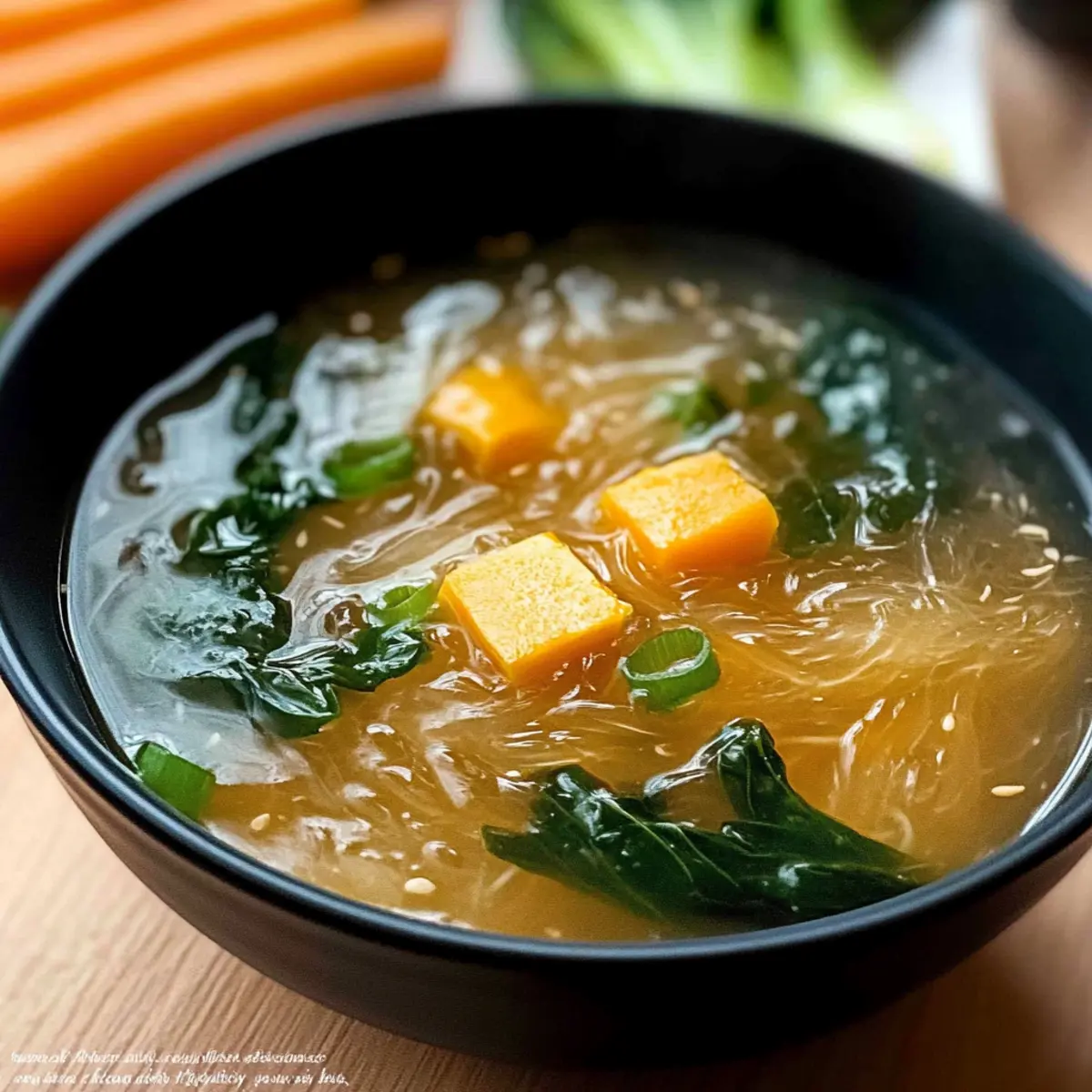
How to Store and Freeze Japanese Glass Noodle Soup
Fridge: Cool the soup completely and transfer it to an airtight container. Store in the fridge for up to 3 days for the best flavor and freshness.
Freezer: To freeze, let the soup cool, then portion it into freezer-safe containers. It can be frozen for up to 3 months.
Reheating: When ready to enjoy, thaw overnight in the fridge and reheat gently on the stove, adding a splash of water to restore the broth’s consistency if needed.
Storage Tip: Because glass noodles can absorb broth and become overly soft, it’s best to store the noodles separately if possible, then combine just before reheating for a comforting bowl of Japanese Glass Noodle Soup!
Make Ahead Options
These Japanese Glass Noodle Soup preparations are perfect for meal prep enthusiasts looking to save time during busy weeknights! You can chop the vegetables and store them in an airtight container in the fridge for up to 3 days to maintain their freshness. Additionally, the glass noodles can be cooked ahead of time, but it’s best to store them separately to avoid becoming mushy; just refrigerate them for up to 24 hours. When you’re ready to enjoy your comforting bowl of soup, simply heat the broth, add the prepped vegetables and noodles, and stir in the mirin and soy sauce to revitalize the flavors. This way, you’ll have a delightful and quick meal at your fingertips!
Japanese Glass Noodle Soup Variations
Feel free to sprinkle in your own creative flair and make this dish uniquely yours with these delightful twists!
- Udon or Soba Noodles: Swap glass noodles for udon or soba for a more substantial texture that adds a heartier element.
- Seasonal Veggies: Use whatever vegetables you have on hand; bell peppers or zucchini work beautifully to diversify flavors and colors.
- Spicy Kick: Add a splash of chili oil or a pinch of red pepper flakes to your soup for a delightful heat that warms the soul.
- Coconut Milk: For a creamier broth, stir in some coconut milk for a hint of sweetness and richness, making it even more comforting.
- Protein-Rich Tofu: Incorporate cubed tofu or a handful of edamame to enhance the soup’s protein content without losing its vegetarian charm.
- Mushroom Medley: Toss in a variety of mushrooms, like shiitake or enoki, for an earthy flavor that deepens the umami experience.
- Herb Infusion: Garnish with fresh herbs like cilantro, basil, or green onion, adding a burst of freshness to every bite.
- Citrus Zing: A sprinkle of lime or lemon juice right before serving brightens up the flavors beautifully, refreshing your palate.
Explore these variations to find your favorite combination! For more cozy recipes, don’t miss out on our delicious Potsticker Soup Cozy and Coconut Curry Soup. Happy cooking!
What to Serve with Japanese Glass Noodle Soup
Pairing this soothing bowl of goodness with the right sides can elevate your meal experience to new heights.
- Steamed Rice: This classic pairing complements the lightness of the soup, allowing the broth to shine through without overwhelming your palate.
- Crisp Green Salad: A refreshing salad with mixed greens, cucumbers, and sesame dressing adds a delightful crunch, balancing the soup’s warmth.
- Vegetable Spring Rolls: These fresh rolls are a delicious way to introduce more textures and flavors, dipping them in a light soy or peanut sauce.
- Edamame: Lightly salted and served warm, edamame offers a protein-rich, nutty companion to the soup, rounding out your meal perfectly.
- Miso Soup: If you’re craving more broth, miso soup is an excellent side that shares harmonizing umami flavors with the Japanese Glass Noodle Soup.
- Chilled Green Tea: This traditional beverage complements the meal while cleansing the palate, adding a refreshing finish to your dining experience.
- Matcha Ice Cream: For dessert, this rich and creamy treat offers a sweet finish that pairs beautifully with the savory elements of the main course.
- Tempura Vegetables: Lightly battered vegetables bring a crispy texture that contrasts nicely with the soft noodles and warm broth, making for a delightful snack or appetizer.
Expert Tips for Japanese Glass Noodle Soup
-
Don’t Overcook Noodles: Keep an eye on the glass noodles; they should be tender yet firm. Overcooking can make them mushy, ruining your soup’s texture.
-
Fresh Ingredients Matter: Using fresh ginger and garlic enhances the broth’s flavor significantly. Dried alternatives are convenient, but fresh brings out the umami magic of Japanese Glass Noodle Soup.
-
Customize Vegetables: Feel free to swap in seasonal vegetables; it not only adds variety but also maintains the soup’s vibrant color and nutrition.
-
Adjust Seasoning Gradually: Always taste before serving! Start with less soy sauce and mirin, then adjust based on your preference for saltiness and sweetness.
-
Protein Boost: Consider adding cubed tofu or a handful of edamame for an extra dose of protein. This addition transforms it into a heartier meal while keeping it vegetarian.
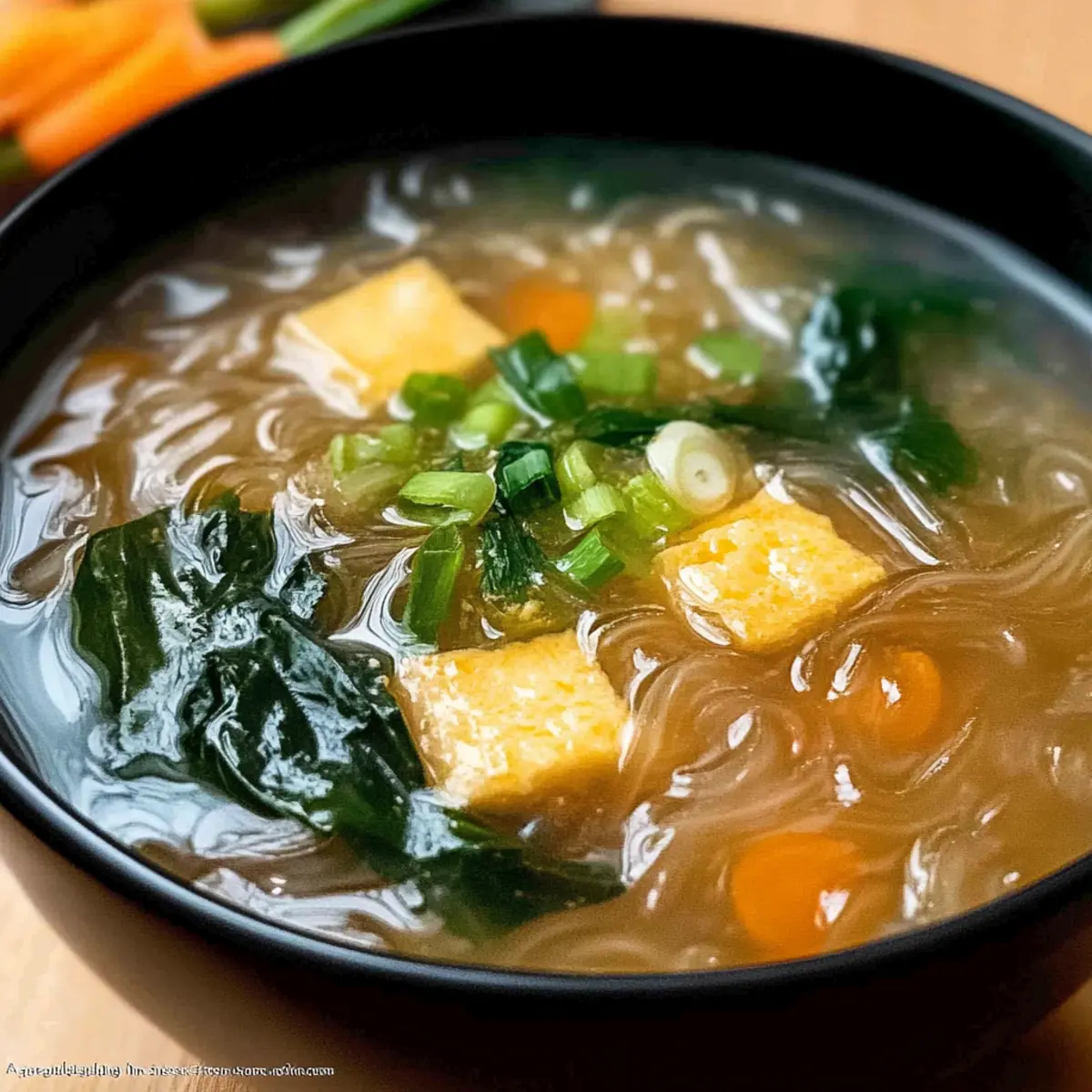
Japanese Glass Noodle Soup Recipe FAQs
What should I look for when selecting glass noodles?
Absolutely! When choosing glass noodles, look for those that are clear, stretchy, and tender. Ideally, they should be free from dark spots and any signs of damage to ensure freshness. Brands like mung bean or sweet potato noodles are popular, but rice vermicelli can be an excellent substitute if you can’t find them.
How can I store leftover Japanese Glass Noodle Soup?
The best way to store your soup is to let it cool completely before transferring it to an airtight container. You can keep it in the fridge for up to 3 days. When you’re ready to enjoy it again, just reheat gently on the stove, adding a splash of water if needed to maintain the broth’s consistency.
Can I freeze Japanese Glass Noodle Soup?
Certainly! To freeze, allow the soup to cool entirely, then portion it into freezer-safe containers. It can be stored in the freezer for up to 3 months. When you’re ready to enjoy, thaw overnight in the fridge and reheat gently on the stove. To retain the texture, it’s best to store the noodles separately and add them just before serving.
What if my glass noodles are mushy after cooking?
Very! If you find your glass noodles turning mushy, it usually means they were overcooked. Next time, cook them for no more than 3-4 minutes, and keep an eye on them. If this happens, you can try adding a bit of acid like lemon juice to help re-create some texture, though it’s not always a guaranteed fix.
Are there any dietary considerations for Japanese Glass Noodle Soup?
Yes, keep an eye on ingredients if grinding allergies are a concern! While the soup is vegetarian, check labels on soy sauce (for gluten), and opt for tamari if you’re gluten-sensitive. If you’re preparing this for pets, be cautious – the seasonings may not be suitable for animals, so it’s best to keep this meal human-only!
Can I add protein to my Japanese Glass Noodle Soup?
Of course! For added protein, I often recommend tossing in cubed tofu or a handful of edamame during the last few minutes of cooking. This not only makes the soup heartier but also keeps it vegetarian—plus, it adds some delightful textures to your bowl!
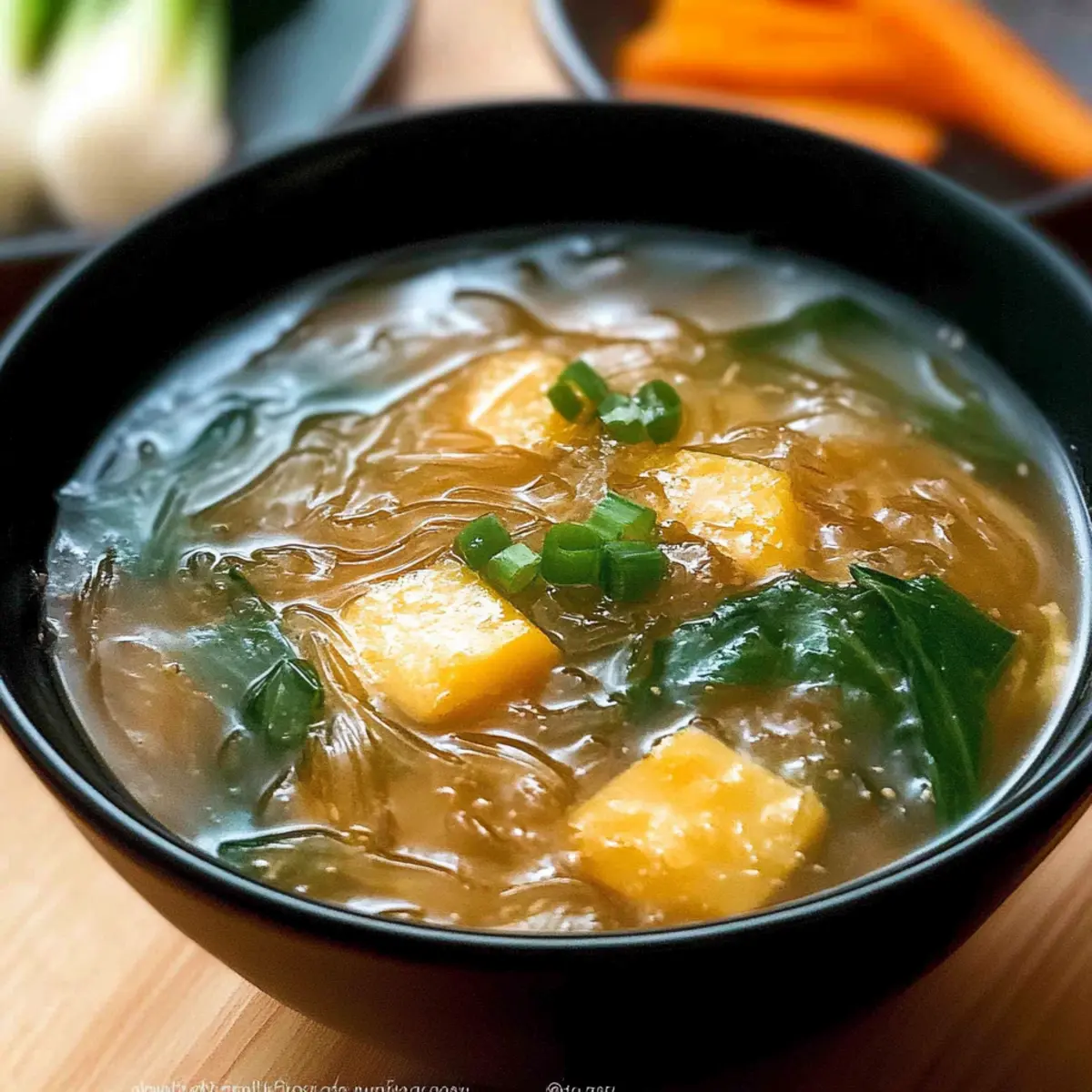
Hearty Japanese Glass Noodle Soup for Instant Comfort
Ingredients
Equipment
Method
- Heat a large pot over medium heat and add a splash of oil. Add minced garlic and grated ginger, sautéing for about 1 minute until fragrant.
- Pour in 4 cups of vegetable broth into the pot and bring it to a gentle boil.
- Once boiling, add the glass noodles and cook for about 3-4 minutes, stirring occasionally.
- Stir in the chopped vegetables, such as bok choy and carrots, and let them simmer for 3-5 minutes.
- Add 2 tablespoons of mirin and 2 tablespoons of soy sauce to the pot, stirring well.
- Taste the soup and adjust the seasoning if needed, adding more salt or soy sauce.
- Ladle the hot soup into bowls, garnishing with fresh herbs or a drizzle of chili oil if desired.
Leave a Reply